




Modeling Tools
Overview
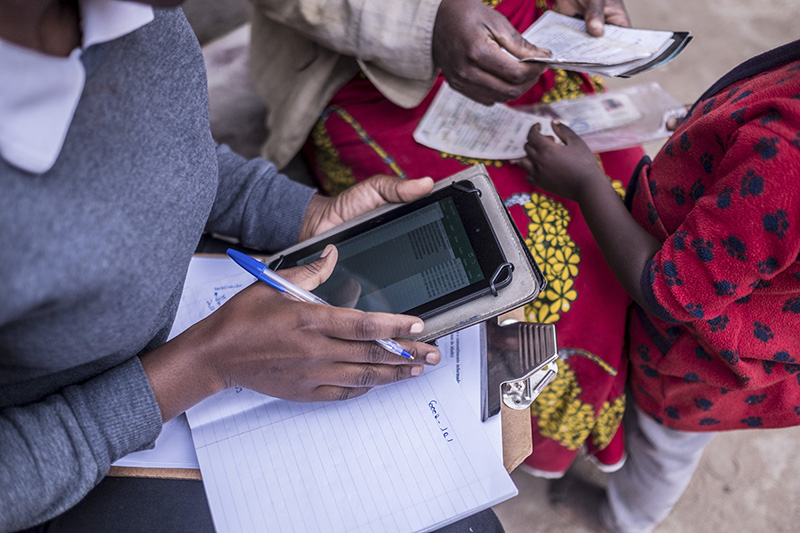
IFPRI has pioneered work on rigorous economic simulation modeling of food systems to inform decision making by national governments, funding partners, and other stakeholders. IFPRI-led models analyze impacts of policy and investment options on nutrition, poverty, social inclusion, climate change, and the environment under real-time shocks (such as COVID-19 and the conflict in Ukraine) and under alternative future scenarios (including different socioeconomic and climate change trajectories). Three complementary modeling systems focus on different geographic scales (subnational to global), time scales (near-term to several decades), and sectoral scales (agriculture sector to economywide).
IFPRI’s Modeling Systems
RIAPA
RIAPA (The Rural Investment and Policy Analysis data and modeling system) is IFPRI’s primary tool for forward-looking, country-level analysis. RIAPA has features that make it ideal for tracking the economywide impacts of policies, investments, or economic shocks at national and subnational levels over the near-to-medium term. RIAPA tracks changes in growth and employment across and beyond the food system, as well as poverty and food security at the household level.
MIRAGRODEP
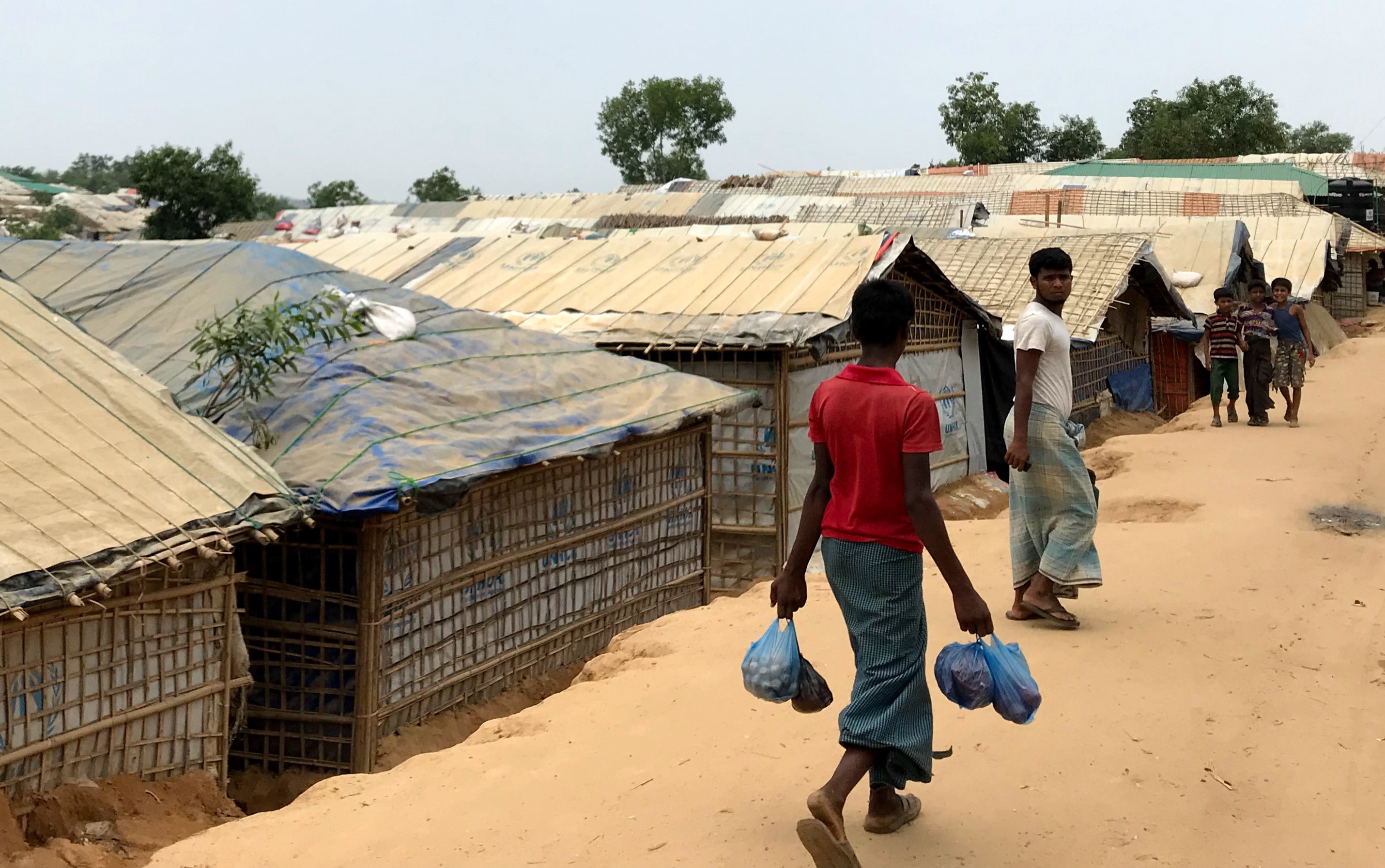
MIRAGRODEP is a global Computable General Equilibrium (CGE) model that captures international economic linkages through the international trade of goods, as well as through the movement of people and capital. MIRAGRODEP provides a rich set of indicators for each region, which allows measurement of the impact of policy changes on both macroeconomic aggregates and inequality indicators over the near-to-medium term.
IMPACT
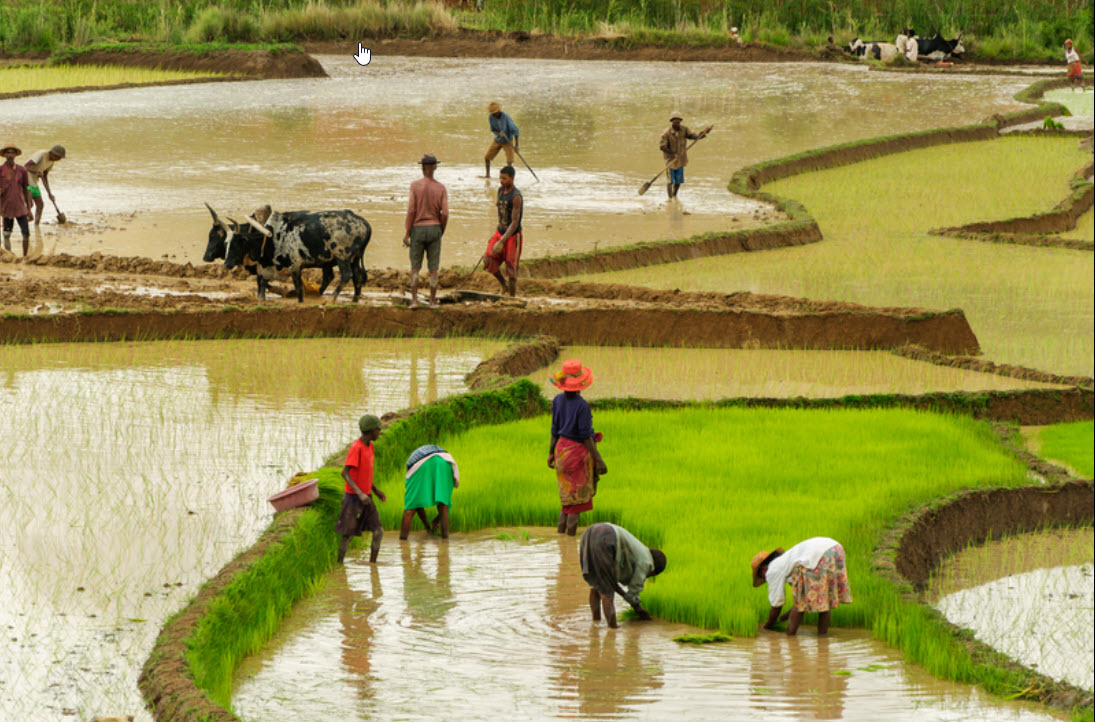
IMPACT (the International Model for Policy Analysis of Agricultural Commodities and Trade) is a system of linked economic, water, and crop models for analysis of climate change and other long-term drivers of the global food system. IMPACT focuses on the agriculture sector at subnational to global scales (including 60 commodities in 158 countries) over the medium-to-longer term (several decades).
Other modeling frameworks supported by IFPRI
DREAMpy (Dynamic Research EvaluAtion for Management, python version)
Open source, user-friendly software for evaluating the economic impacts of agricultural research and development projects.
MINK
A global-scale, systematically geographically gridded, process-based crop simulation modeling system.
SPAM (Spatial Production Allocation Model)
Open source, user-friendly software for evaluating the economic impacts of agricultural research and development projects.
Models Webinar Series
In this webinar series, our researchers present insights from IFPRI’s key modeling systems and their outputs, developed with other CGIAR Centers and partners. This work is helping to answer the critical questions facing decision-makers and stakeholders in today’s agrifood systems: What does climate change mean for the future of agriculture? How do we prioritize different agrifood system policies and investments? What are the sources, impacts, and trade-offs of agricultural productivity growth? What policy steps should governments take when a crisis strikes and a rapid response is required?

Related Blogs
-
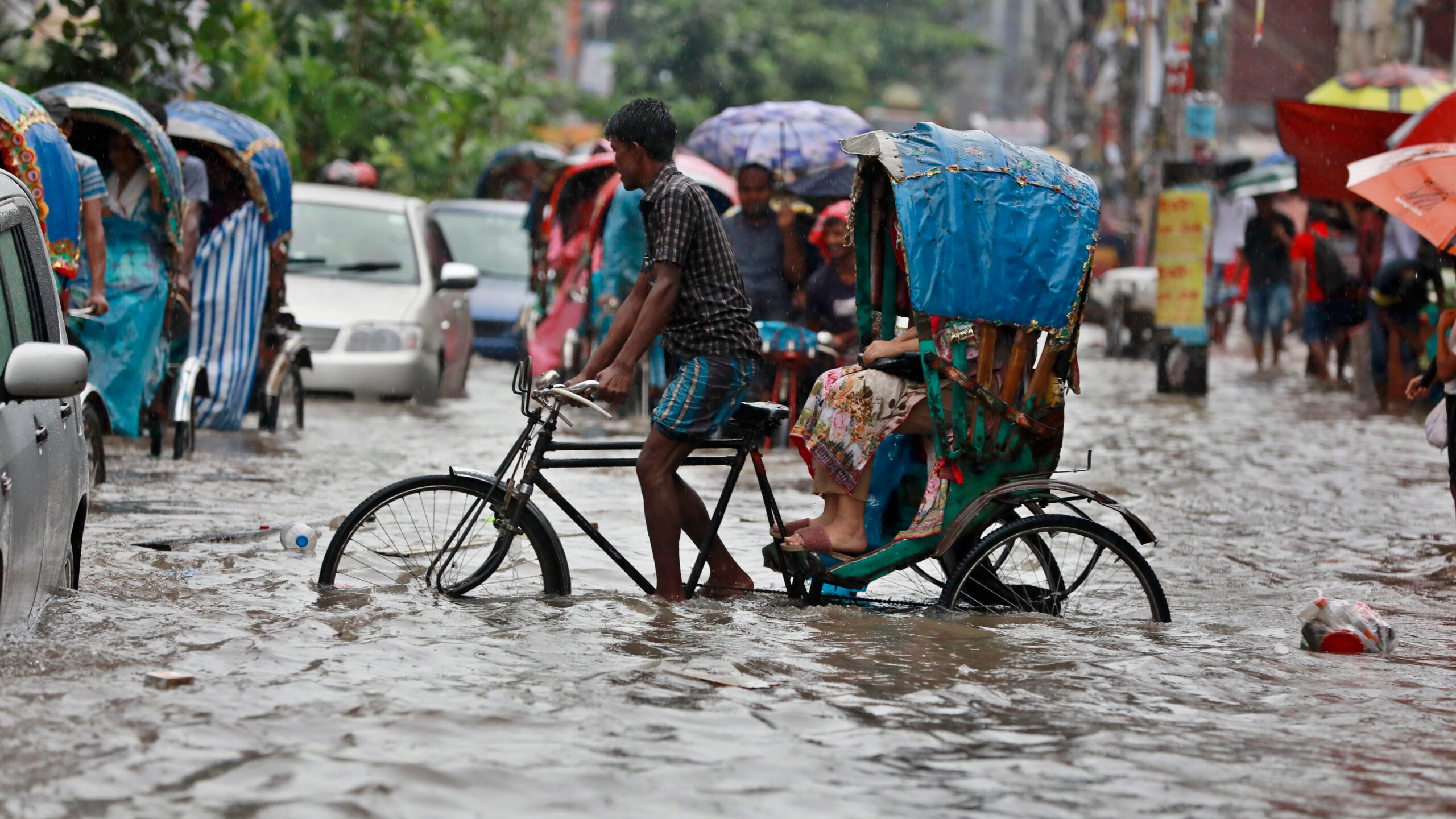
Beyond the harvest: Uncovering the hidden risks driving poverty and hunger in developing economies
Systematic risk profiling reveals wide differences in country vulnerabilities.
-
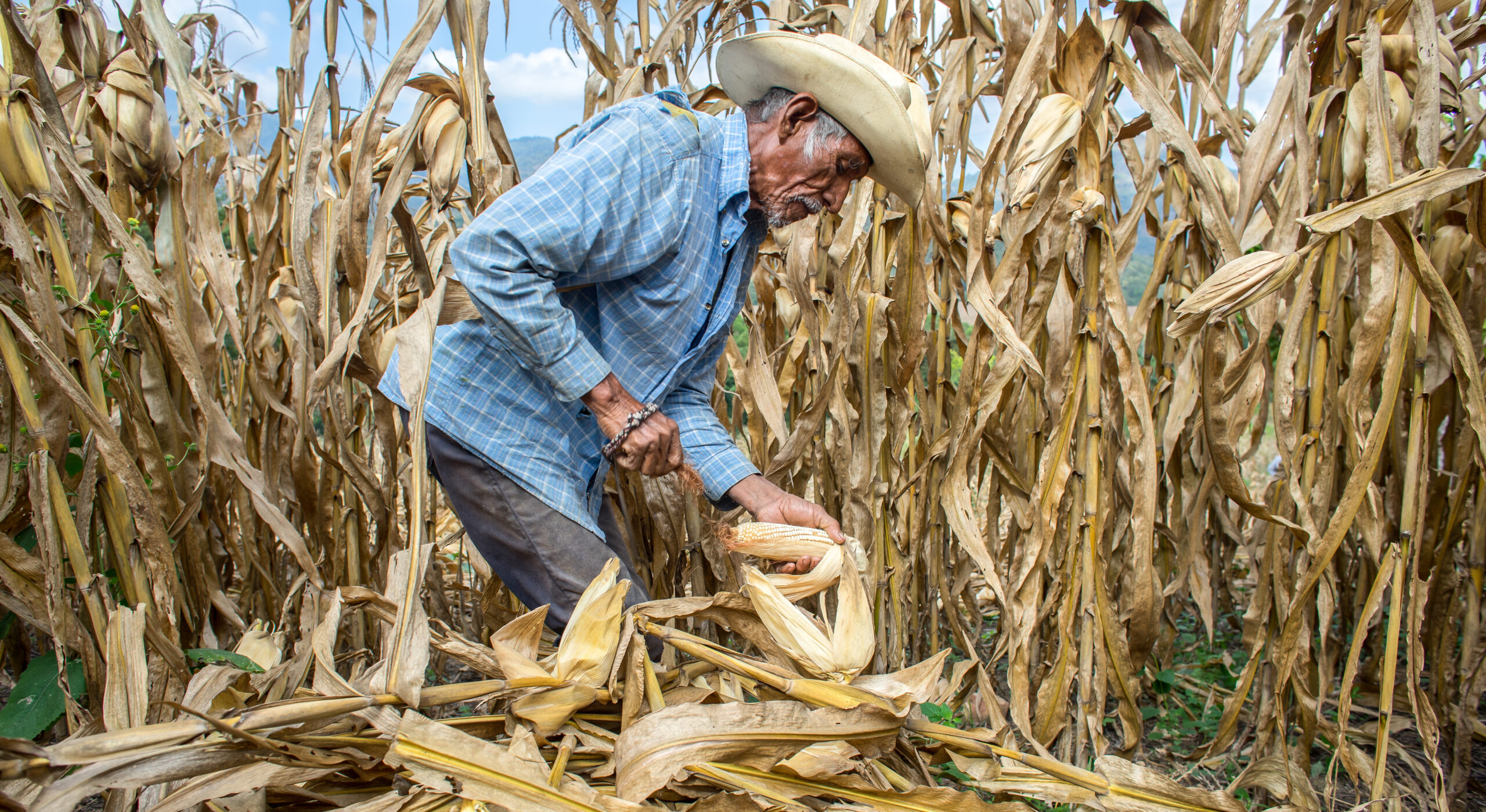
How the Iran crisis affects fertilizer-dependent countries: The case of Mexico
A challenging dynamic for Latin America and the Caribbean.
-
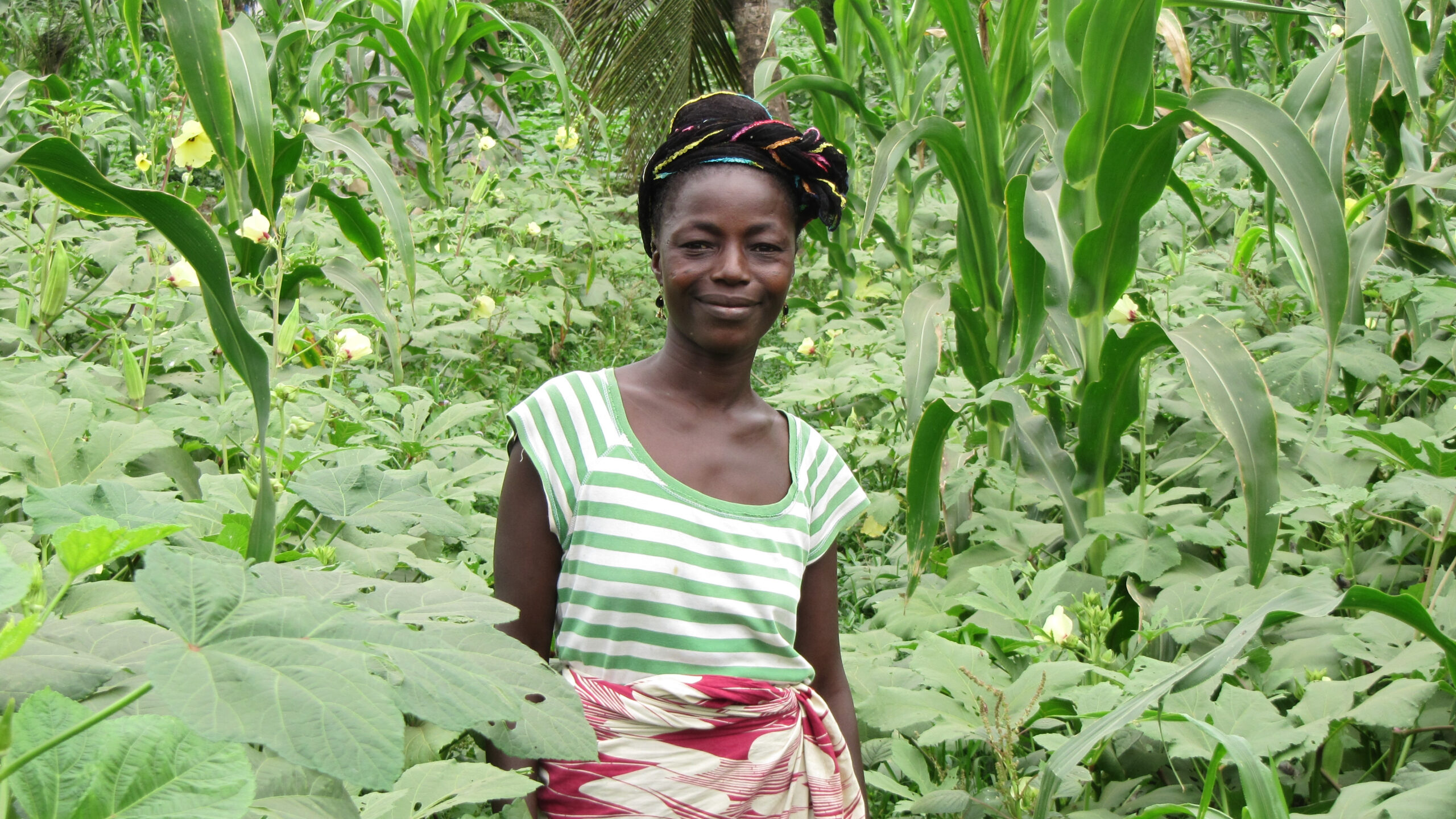
How women view marriage and childbearing decisions: Recent WEMNS evidence from Liberia and Sierra Leone
Insights from IFPRI’s Women’s Empowerment Metric for National Statistical Systems.
Related News
-
Earth Day 2026: Agroecology and micronutrient supplements power food sovereignty (Nutrition Insight)
The article features recent IFPRI research on combining agriculture programs with micronutrient supplementation, water, sanitation, and hygiene (WASH), and behavior change interventions.
-
Devex Dish: Shock to the system (Devex)
Devex quoted Johan Swinnen, IFPRI Director General, in the April 15 edition of Devex Dish: “The war represents the third major shock for the global food system in just six years,…
-
New IFPRI book documents the impacts of Sudan’s conflict and identifies evidence‑based pathways to recovery
The book is being launched today in Cairo on the opening day of the conference “Three Years of Conflict: What the Evidence Tells Us and What Recovery Requires.”
Related Events
-
When Data Is Everywhere: Digital Research Methods Transforming Food Systems Science
In an era of data abundance, novel digital research methods are reshaping how we study and improve food systems. Building on earlier sessions focused on speech-based AI and farmer-generated data, this discussion broadens the lens, bringing together two researchers who are applying cutting-edge digital tools to address complex questions in the food domain. First, Bia…
-
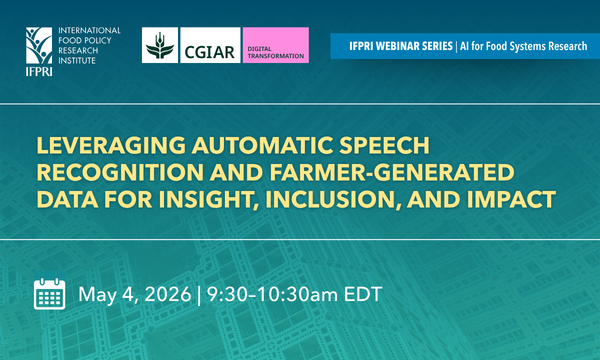
Leveraging Automatic Speech Recognition and Farmer-Generated Data for Insight, Inclusion, and Impact
As speech recognition and mobile data collection tools mature, increasing attention is turning to a critical next question: how can farmer-generated data be meaningfully used to inform research, programs, and policy? This session builds directly on earlier discussions of Automatic Speech Recognition (ASR) for agriculture by focusing on the applications, utility, and downstream impacts of…
-

AI for Food Security Forum
The Artificial Intelligence (AI) for Food Security Forum, brings together U.S. and global policymakers, technology developers, financers, researchers, and implementing partners working at the forefront of AI for food security. Join CSIS, and the member organizations of the AI Collaborative: Food Security, for cross-cutting discussions that explore the promises and risks of AI-enabled technologies for food…
-
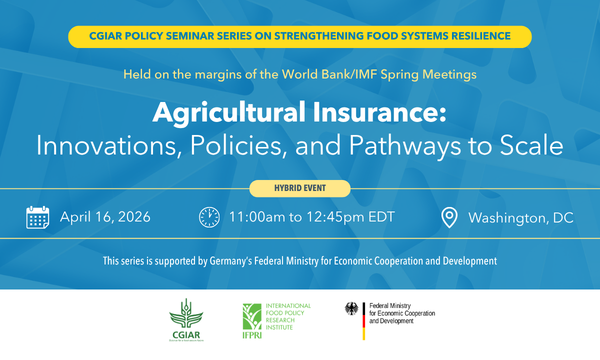
Agricultural Insurance: Innovations, Policies, and Pathways to Scale
Farm households face numerous risks that can discourage investments and trap them in poverty. Insurance should be a useful tool to reduce these hazards, but agricultural risks are inherently difficult to insure against. Willingness and capacity to pay insurance premiums also range widely. The lack of adequate agricultural insurance is a major concern for governments,…